How Artificial Intelligence Is Reshaping Our World

From the way we communicate to how businesses make decisions, Artificial Intelligence (AI) is no longer a futuristic idea—it’s part of our everyday lives.

Think about virtual assistants that schedule your day, recommendation systems that know exactly what you want to watch, or smart tools that help doctors detect diseases earlier. These aren’t just innovations—they’re transformations powered by AI.

While many people associate AI with chatbots like Gita GPT, that’s only the beginning. Behind the scenes, AI is driving powerful changes across industries:

  • Healthcare: Improving diagnosis and patient care
  • Education: Personalizing learning experiences
  • Finance: Detecting fraud and optimizing investments
  • Agriculture: Enhancing crop yields with smart predictions
  • Business & Marketing: Turning data into actionable insights

What makes AI truly exciting is its ability to learn, adapt, and evolve—helping humans solve complex problems faster and more efficiently than ever before.

🚀 As we move toward a smarter future, one question remains:

👉 Which AI application fascinates you the most?
Is it self-driving cars, intelligent chatbots, or something else entirely?

💬 Share your thoughts in the comments—we’d love to hear your perspective!


#AI #Innovation #FutureTech #SmartICT

Cybersecurity in the Age of AI: 2026 Enterprise Threats & Defense

Artificial Intelligence is redefining cybersecurity in the age of AI, transforming both cyber defense and cybercrime. As we enter 2026, AI-driven cyber threats are growing in speed, scale, and sophistication — forcing enterprises to rethink traditional security models.

This article explores AI cybersecurity trends for 2026 and explains how enterprises can prepare for the rapidly evolving digital threat landscape.


AI-Driven Cyber Attacks Will Dominate in 2026

Cybercriminals now use AI to automate and enhance attacks, including:

  • Highly targeted phishing powered by machine learning
  • Deepfake audio and video for identity fraud
  • AI-based vulnerability discovery and exploitation

Unlike traditional attacks, AI-powered cyber threats adapt in real time, making them harder to detect and stop.

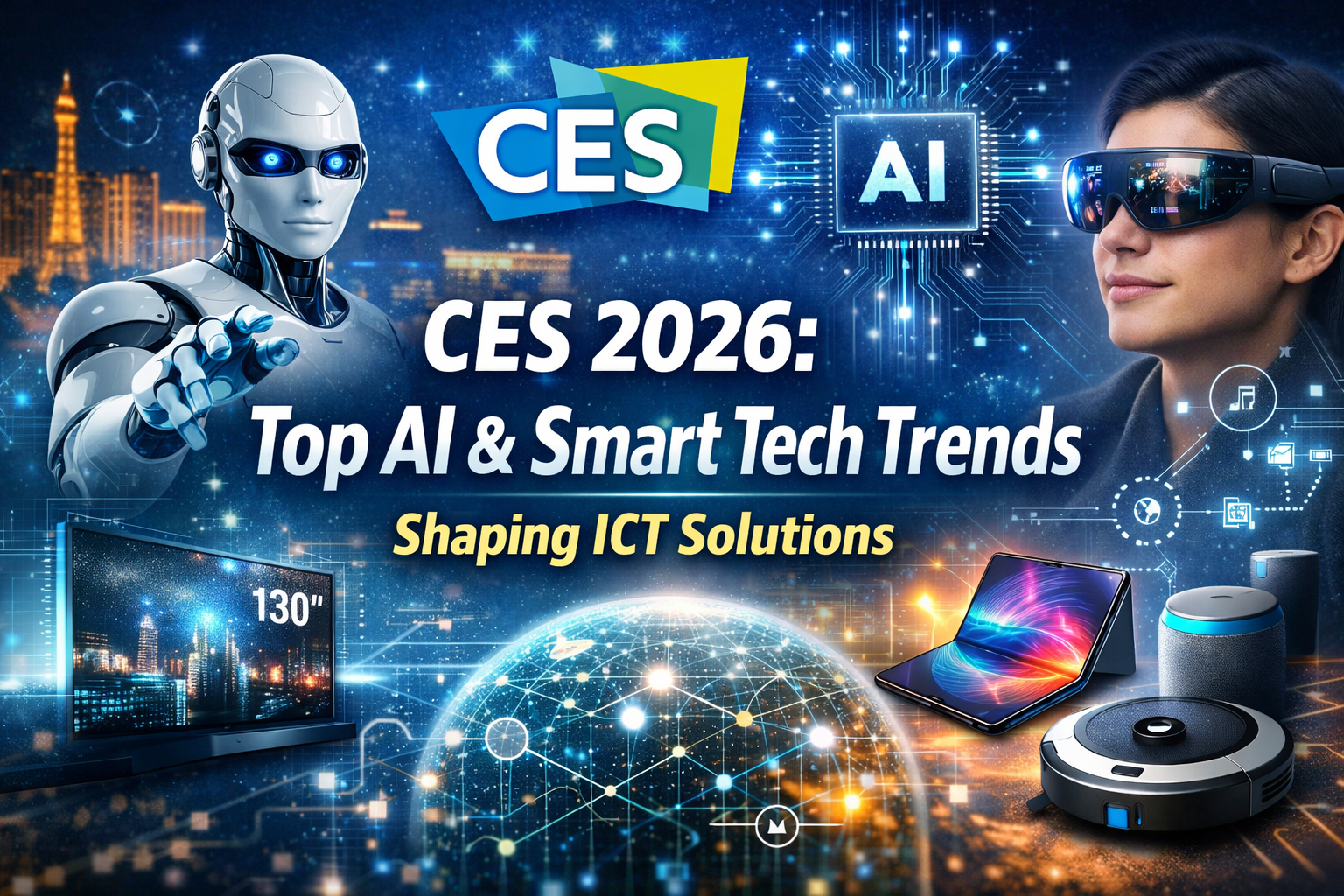
CES 2026: Top AI and Smart Tech Trends Shaping ICT Solutions

The global technology landscape is evolving faster than ever, and CES 2026 has once again proven to be the launchpad for innovations that will define the future of Information and Communication Technology (ICT). From advanced artificial intelligence to smarter devices and energy-efficient hardware, this year’s CES highlights how technology is becoming more intelligent, connected, and business-ready.

Below are the top AI and smart tech trends from CES 2026 that are shaping modern ICT solutions.


1. AI Becomes Core ICT Infrastructure

At CES 2026, AI is no longer a supporting feature—it is the backbone of ICT systems.

  • AI is being embedded directly into servers, network devices, and endpoints
  • Enterprises are adopting AI-driven automation for IT operations, cybersecurity, and customer engagement
  • Predictive analytics and self-healing networks are becoming standard ICT capabilities

🔹 Impact on ICT:
Organizations can expect faster decision-making, reduced operational costs, and more resilient digital infrastructure.


2. Edge AI and Smart Devices Take Center Stage

One of the biggest shifts at CES 2026 is the move from cloud-only AI to edge computing.

  • AI processing now happens directly on IoT devices, smart sensors, wearables, and industrial equipment
  • Reduced latency and improved data privacy
  • Ideal for smart cities, healthcare, manufacturing, and logistics

🔹 Impact on ICT:
Edge AI enables real-time insights, reliable connectivity, and efficient bandwidth usage across ICT networks.


3. Next-Generation AI Chips and Processors

Semiconductor innovation was a major highlight at CES 2026.

  • New AI-optimized processors deliver higher performance with lower power consumption
  • Designed for data centers, enterprise networks, and AI workloads
  • Supports large-scale AI deployment without excessive energy costs

🔹 Impact on ICT:
More powerful and energy-efficient ICT infrastructure that can scale with AI-driven applications.


4. Smart Office and Enterprise Technology

CES 2026 showcased smarter tools for modern workplaces.

  • AI-powered laptops and collaboration devices
  • Smart displays with voice, gesture, and AI control
  • Intelligent office management systems that optimize energy and productivity

🔹 Impact on ICT:
Hybrid work environments become more secure, connected, and productive through integrated smart ICT solutions.


5. Wearable and Low-Power Smart Technology

Wearable technology continues to expand beyond fitness.

  • AI-enabled smart glasses and sensors
  • Ultra-low-power processors for continuous monitoring
  • Applications in healthcare, industrial safety, and field services

🔹 Impact on ICT:
ICT systems must support real-time data integration, mobility, and secure wearable connectivity.


6. Cybersecurity Powered by AI

With increasing digitalization, cybersecurity was a major theme at CES 2026.

  • AI-based threat detection and response
  • Automated security monitoring across networks and endpoints
  • Zero-trust and AI-driven identity management

🔹 Impact on ICT:
Smarter security frameworks protect data, devices, and users without slowing operations.


What CES 2026 Means for ICT Solution Providers

CES 2026 confirms that the future of ICT is:

  • AI-first
  • Device-intelligent
  • Energy-efficient
  • Highly connected

ICT solution providers must now focus on delivering integrated AI, smart hardware, cloud, and edge solutions that support business growth and digital transformation.


Conclusion

CES 2026 highlights a clear message: AI and smart technologies are redefining ICT solutions. From intelligent infrastructure to edge AI and smart workplaces, businesses that embrace these trends will stay competitive in an increasingly digital world.

Smart ICT solutions are no longer optional—they are essential.

Windows 11 Tests Shared Bluetooth Audio for Two Headsets

Windows 11 is rolling out a new preview feature allowing users to stream audio simultaneously to two pairs of wireless headphones, earbuds, speakers, or hearing aids using the Bluetooth LE audio codec. The Verge
Why it matters: This feature brings Windows closer to the multi-listener audio sharing already seen on some smartphones and devices. It enhances shared viewing or listening experiences.
Key points:

  • Feature currently available to Windows 11 Insider testers in the Dev and Beta channels. The Verge
  • Requires compatible Bluetooth LE audio devices (e.g., Sony WH-1000XM6, Samsung Galaxy Buds 3, etc.) and specific Copilot Plus PCs. The Verge
  • Broadens Windows’s capabilities in ambient/collaborative use cases (watching movies together, sharing audio) and aligns with the wireless-audio ecosystem trend.
    Implication for your audience: If your site covers PC hardware or audio gear, this is an opportunity to discuss best headsets for the feature, compatibility issues, and when it might roll out to general users.

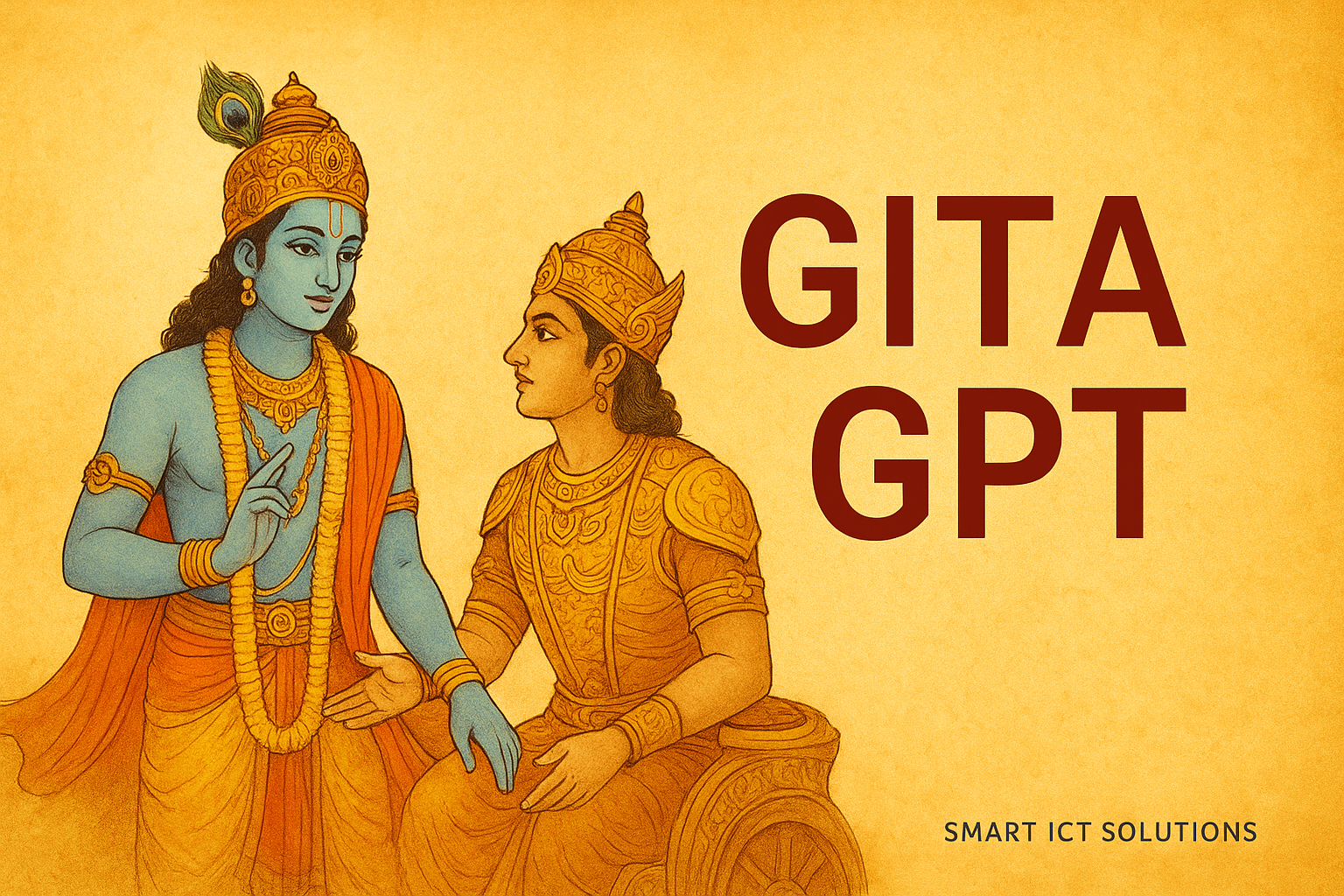
What it is Gita GPT

👉Gita GPT is a conversational chatbot or tool based on AI inspiration derived from the teachings of the ancient Hindu scripture the Bhagavad Gītā.

Major features:

👉It offers a means of posing life, purpose, duty, spirituality, etc., questions and responding to them based on the teachings of the Gītā.

👉It makes use of modern AI / GPT (large language model) technology to scan user questions and respond in terms of applicable verses, commentary or counsel.

👉It tends to emphasize words like dharma (duty/righteousness), karma (action), detachment, self-realization — standard concepts of the Gītā.

👉There are different implementations / websites / apps by the name “Gita GPT” (e.g. gitagpt.org, gitagpt.in, iOS/Android apps).

How it works (at a high level)

👉 The programmers feed the AI model or build an interface that derives from the Bhagavad Gītā words, commentary/interpretations, and likely some training so the bot can “respond in style”. For example: a GitHub page claims that it uses knowledge of the Gītā to provide answers.

👉When you ask a question (e.g., “How do I deal with guilt?” / “What am I duty-bound to do in this situation?”), the bot tries to match your question to verses & philosophical ideas in the Gītā, and then gives back an answer in human language.

👉App versions for some have original verses (slokas), translations, and meanings in multiple languages.

👉The interface can be made similar to a chat/ask-the-guru sort of tool — “Ask Krishna” or such metaphors are used.

What the users love about it / why they like it

👉The Gītā is a very powerful spiritual great work (with broad appeal beyond strictly religious usage) — offering counsel on duty, purpose, action, self-knowledge, etc.

👉Because it is interactive, one can feel less “overwhelmed” than reading all scripture through; one gets to ask their specific questions.

👉It can have the capacity to unite tradition & technology: divine wisdom meets AI.

⚠️ Caveats / considerations

👉It’s no substitute for an actual teacher, close reading, or introspection. The Gītā is a complex text, with multiple levels of meaning.

👉Like all AI/chatbot programs: the replies can be generic, oversimplify, or misread your circumstances. Use judgment.

👉If you give extremely specific, technical or specialized questions (specifically beyond the immediate context of the Gītā), the tool can struggle or give general advice.

👉The tool has a particular spiritual tradition as its basis — if you come from a divergent background or require very secular/academic philosophical insights, it might not address all that you seek.

Can ancient wisdom guide modern AI?

Follow us on: –

Website: www.smarticts.net

telegram: https://t.me/smarticts

TikTok: https://www.tiktok.com/@smartict

Youtube: https://www.youtube.com/@smart_ict_solutions

Facebook: https://web.facebook.com/smarticts

Snapchat to charge users for storing their old photos and videos

Snapchat has announced it will start charging for storing photos and videos – prompting a backlash from users who have built up a large archive of old posts.

The popular messaging app has allowed users to save and store previously posted content in its Memories feature since it was introduced in 2016.

But it says people with more than five gigabytes (GB) worth of Memories will now need to pay to keep them available.

The app’s parent company Snap declined to tell BBC News how much the storage plans would cost UK users, saying only the change would be made as part of a “gradual global rollout”.

Users on social media have reacted with dismay, accusing the company of being greedy.

Snap has acknowledged it’s “never easy to transition from receiving a service for free to paying for it” – but suggested it be “worth the cost” for users.

“These changes will allow us to continue to invest in making Memories better for our entire community,” it said in a blog post announcing the move.

It said more than one trillion Memories had been saved by users since being introduced nearly a decade ago.

The feature allows users to save photos and videos shared initially for 24 hours or less on the platform, with users prompted to re-post them as a memory or “throwback” at a later date.

Users with more than 5GB of saved Memories will be prompted to upgrade to a 100GB storage plan, under the changes.

Increased levels of storage will be available to users paying for more expensive Snapchat+ and Snapchat Premium subscriptions.

The company says it will provide 12 months of temporary storage for those exceeding the limit, and users can download saved content to their device.

A company spokesperson told tech publication TechCrunch its initial 100GB storage plan would be priced at $1.99 (£1.48) per month, with 250GB included in the $3.99 (£2.96) cost of a Snapchat+ subscription.

‘Inevitable change’

Snap said in its blog post that its rollout of storage plans would not affect “the vast majority of Snapchatters”, whom it said had less than 5GB of Memories.

But the move has been criticised by some on social media, with users sharing messages sent by the platform telling them they need to pay for storage to keep their photos and videos.

Some say they have used Snap’s previously free storage over many years meaning they have considerably more than 5GB of data stored on the platform – so are now facing big bills.

Others say being forced to choose between paying a subscription or losing their Memories is “unfair” and “greedy” on the part of Snap.

Snap said in April that Snapchat had surpassed 900 million monthly active users – while rivals such as Instagram and TikTok boast billions respectively.

Drew Benvie, founder and chief executive of social media consultancy Battenhall, believes that eventually all social media platforms will charge for storage.

“The road to paying for storage on social media is inevitable,” he told BBC News.

“In an era where we post less, but save more, this is an evolution of messaging and social media platforms.”

Source: CNN

China’s ByteDance will get 1 of 7 board seats for TikTok’s US operations, official says

WASHINGTON, Sept 20 (Reuters) – A U.S.-China agreement on TikTok’s U.S. operations includes China’s ByteDance choosing one of seven board members for the new entity, with Americans holding the six other seats, a senior White House official said on Saturday.

President Donald Trump is trying to keep the short video app with 170 million U.S. users from being banned after Congress passed a law in 2024 that ordered it shut down by January 2025 if its U.S. assets were not sold by owner ByteDance.

Source: reuters

AI set to transform global trade, says World Trade Organization report

GENEVA, Sept 17 (Reuters) – Artificial intelligence could boost the value of trade in goods and services by nearly 40% by 2040, but without adequate policies it could also exacerbate economic divides, a new World Trade Organization report warned on Wednesday.

Lower trade costs and enhanced productivity could drive substantial increases in trade and GDP by 2040, with global trade projected to rise by 34-37% under various scenarios, according to the WTO’s World Trade Report.

Global GDP could also increase by 12-13%, it said.

“AI could be a bright spot for trade in an increasingly complex trading environment,” said the Deputy Director General of the WTO, Johanna Hill, commenting on the annual report that analyses trends in the multilateral trading system.

Acknowledging current turbulence in the world trading system, Hill noted that AI was reshaping the future of the global economy and international trade, with the potential to reduce trade costs and boost productivity.

Global trade rules, governed by the Geneva-based watchdog, have faced major disruption this year following a slew of tariffs by U.S. President Donald Trump’s administration.
Source: Reuters

Google owner reveals £5bn AI investment in UK ahead of Trump visit

The world’s fourth-biggest company, Google owner Alphabet, has announced a £5bn ($6.8bn) investment in UK artificial intelligence (AI).

The money will be used for infrastructure and scientific research over the next two years – the first of several massive US investments being unveiled ahead of US President Donald Trump’s state visit.

Google’s president and chief investment officer Ruth Porat told BBC News in an exclusive interview there were “profound opportunities in the UK” for its “pioneering work in advanced science”.

The company will officially open a $1bn (£735m) data centre in Waltham Cross, Hertfordshire, with Chancellor Rachel Reeves on Tuesday.
Source: BBC

Breakthrough in AI-Powered Microchips Could Revolutionize Mobile Devices

May 1, 2025 — Silicon Valley, CA

In a major leap forward for mobile technology, a team of researchers at MIT and NVIDIA has unveiled a groundbreaking AI-powered microchip, dubbed NeuroCore X, that dramatically improves device speed and energy efficiency. Designed to mimic the brain’s neural activity more closely than any chip before it, NeuroCore X is capable of learning on-device in real time — reducing reliance on cloud-based AI processing.

This new chip could soon be embedded in smartphones, wearables, and smart home devices, enabling them to adapt to users’ behavior without sending data to external servers. Experts predict this will enhance privacy, reduce latency, and even cut carbon emissions caused by data center usage.

Key Features of NeuroCore X:

  • 10x faster AI processing than current mobile chips
  • 80% reduction in power consumption
  • Real-time learning without internet connectivity
  • Built-in encryption for maximum security

Tech giants including Apple, Samsung, and Google are reportedly already testing prototypes for integration into next-gen devices expected as early as 2026.

🔍 Why it matters: This could mark the beginning of truly intelligent edge devices — personalized, private, and perpetually improving.